Search Engine Optimization (SEO), is the process of improving a website so that it can appear more prominently in search engine results such as Google and Bing.
When people search for something online, search engines analyze thousands of pages to determine which results are most relevant and useful.Search Engine Optimization (SEO) helps search engines understand your website and helps users find your content.
Why Numbers Improve Your SEO Title
- Higher Click-Through Rates (CTR): Titles with numbers stand out visually in crowded Search Engine Result Pages (SERPs), drawing more clicks.
- Sets Clear Expectations: Numbers tell the user exactly what to expect, making the content feel digestible and actionable.
- Signals Freshness: Adding current years (e.g., “2026 Guide”) reassures search engines and users that the information is up to date.
How Does Search Engine Optimization (SEO) Work?
Search Engine Optimization (SEO) involves several important areas:
Search Engine Optimization (SEO) is essential for increasing online visibility and connecting websites with the right audience. Moving beyond simple keyword stuffing, modern SEO focuses on delivering genuine value through clear structure, fast technical performance, and authentic search intent.
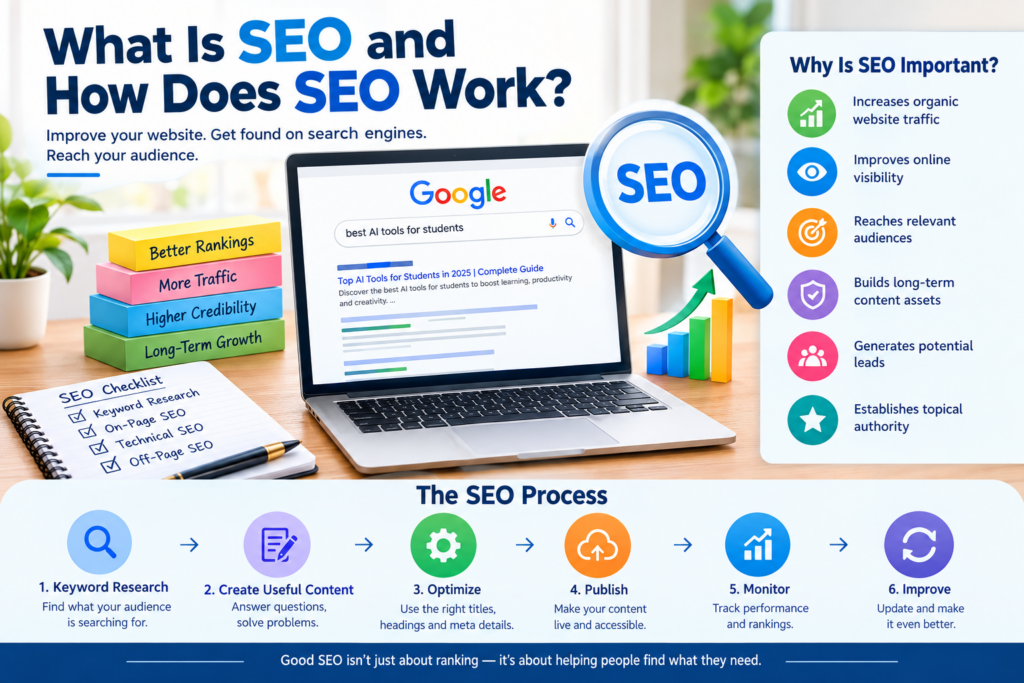
A successful strategy rests on four key pillars:
- Keyword Research: Understanding what users search for and why.
- On-Page SEO: Crafting helpful content with optimized titles and headings.
- Technical SEO: Ensuring fast loading speeds, mobile-friendliness, and clean site architecture.
- Off-Page SEO: Earning trustworthy backlinks to build site authority.
Rather than looking for quick shortcuts, sustainable digital growth requires a long-term commitment to quality. Search engines reward websites that prioritize the user experience, offer clear and original information, and maintain a strong technical foundation. When you consistently answer user questions effectively and keep your site accessible, organic traffic grows naturally, transforming casual visitors into loyal readers and long-term customers.
1. Keyword Research Search Engine Optimization (SEO)
Keywords are the words and phrases people type into search engines.
For example, if you have an AI technology website, potential keywords could include:
- AI tools
- Best AI tools
- AI automation
- Free AI tools
- AI tools for business
- AI tools for students
The goal isn’t simply to use a keyword repeatedly. You should understand the search intent Search Engine Optimization (SEO) behind the keyword and create content that genuinely answers the user’s question.
2. On-Page SEO
On-page Search Engine Optimization (SEO)focuses on elements that you can control directly on your website.
Important elements include:
- SEO-friendly page titles
- Meta descriptions
- H1, H2, and H3 headings
- Relevant keywords
- Helpful and original content
- Internal links
- Image alt text
- Easy-to-read page structure
For example, instead of writing a page with a generic title such as “Our Blog,” you could use a more descriptive title such as “AI Tools, Automation & Technology Guides.”
3. Technical SEO
Technical Search Engine Optimization (SEO) helps search engines crawl and understand your website.
Some common technical SEO factors include:
- Website loading speed
- Mobile friendliness
- HTTPS security
- XML sitemap
- Proper URL structure
- Crawlability
- Fixing broken links
- Structured data where appropriate
A website can have excellent content, but technical problems can make it harder for search engines and Search Engine Optimization (SEO) users to access that content.
4. Off-Page SEO
Off-page Search Engine Optimization (SEO) involves activities outside your website that can contribute to your site’s visibility and reputation.
One important example is earning quality backlinks from relevant and trustworthy websites.
However, getting hundreds of low-quality or spammy links isn’t a good Search Engine Optimization (SEO) strategy. The focus should be on creating useful content that other websites have a genuine reason to reference.
Why Is SEO Important?
Search Engine Optimization (SEO) can help a website attract people who are actively searching for information, products, or services related to its topic.Search Engine Optimization (SEO) has evolved far beyond traditional keyword placement. In today’s digital ecosystem, search engines and conversational AI systems prioritize genuine trust, comprehensive topical depth, and structured clarity over repetitive text. Modern optimization requires an integrated approach that satisfies both human readers and sophisticated crawling algorithms.
For example, someone searching for “best AI tools for students” already has a specific interest. A well-optimized article that provides useful information can potentially reach that audience through organic search.
SEO can also help businesses:
- Increase organic website traffic
- Improve online visibility
- Reach relevant audiences
- Build long-term content assets
- Generate potential leads
- Establish topical authority
How Long Does Search Engine Optimization (SEO) Take?
Search Engine Optimization (SEO) usually isn’t an overnight strategy.
The time required can vary depending on factors such as website age, competition, content quality, technical SEO, backlinks, search intent, and the topic being targeted.
Instead of expecting immediate results, it’s better to think of SEO as a long-term process:
Combine numbers and power words to construct high-performing title tags:
| Generic Title | Power Word & Number Upgrade | Key Impact |
| SEO Guide for Beginners | 7 Essential SEO Tips for Beginners in 2026 | Creates urgency and essential value |
| How to Improve Website Ranking | 10 Proven Strategies to Skyrocket Your Google Ranking | Signals high reliability and dramatic results |
| Understanding Search Optimization | The Ultimate SEO Checklist: 5 Crucial Steps | Positions as the definitive, single-source solution |
Research → Create useful content → Optimize → Publish → Monitor → Improve
Common Search Engine Optimization (SEO) Mistakes to Avoid
Some common mistakes include:
- Keyword stuffing
- Publishing thin or low-value content
- Copying content from other websites
- Ignoring mobile users
- Using misleading titles
- Building poor-quality backlinks
- Ignoring technical SEO
- Writing only for search engines instead of people
One of the biggest mistakes is focusing too much on keyword density. Keywords are important, but repeating the same phrase unnecessarily can make content difficult to read.At its core, a successful strategy relies on four foundational pillars: keyword research driven by authentic search intent, clean on-page structure, robust technical performance, and off-page authority built through credible references. Rather than chasing arbitrary keyword density targets, contemporary optimization focuses on creating valuable, original content that directly answers user questions.
What Is the Best Search Engine Optimization (SEO) Strategy?
There isn’t one single SEO technique that works for every website.
A practical Search Engine Optimization (SEO) strategy starts with understanding your audience and their search intent. Then create genuinely useful content, make the website technically accessible, optimize important on-page elements, build relevant authority, and regularly analyze performance.Furthermore, the rise of AI-driven search overviews means visibility is no longer just about securing a traditional blue link. Brands must focus on establishing strong E-E-A-T (Experience, Expertise, Authoritativeness, and Trustworthiness) signals, ensuring their pages are structured clearly enough to be cited as trusted reference points by AI assistants. Technical factors like mobile usability, fast loading speeds, and clean XML sitemaps remain critical for ensuring smooth indexing.
For a new website, I would start with:
1. Find relevant topics and keywords
2. Understand what users are searching for
3. Create better and more useful content
4. Optimize titles, headings, URLs, and images
5. Improve website speed and mobile usability
6. Add internal links between related pages
7. Promote useful content and earn relevant backlinks
8. Track performance and update older content
Search Engine Optimization (SEO) is not just about getting a website to rank. The real objective should be to help users find the information they need quickly and easilyUltimately, sustainable digital growth comes from treating optimization as a long-term commitment to quality rather than a quick shortcut. By consistently prioritizing user needs, maintaining technical health, and building real authority, websites can secure long-term organic visibility and foster deep audience trust.
If you consistently create useful content and build a technically sound website, Search Engine Optimization (SEO) can become an important source of long-term organic traffic.
Add a Comment