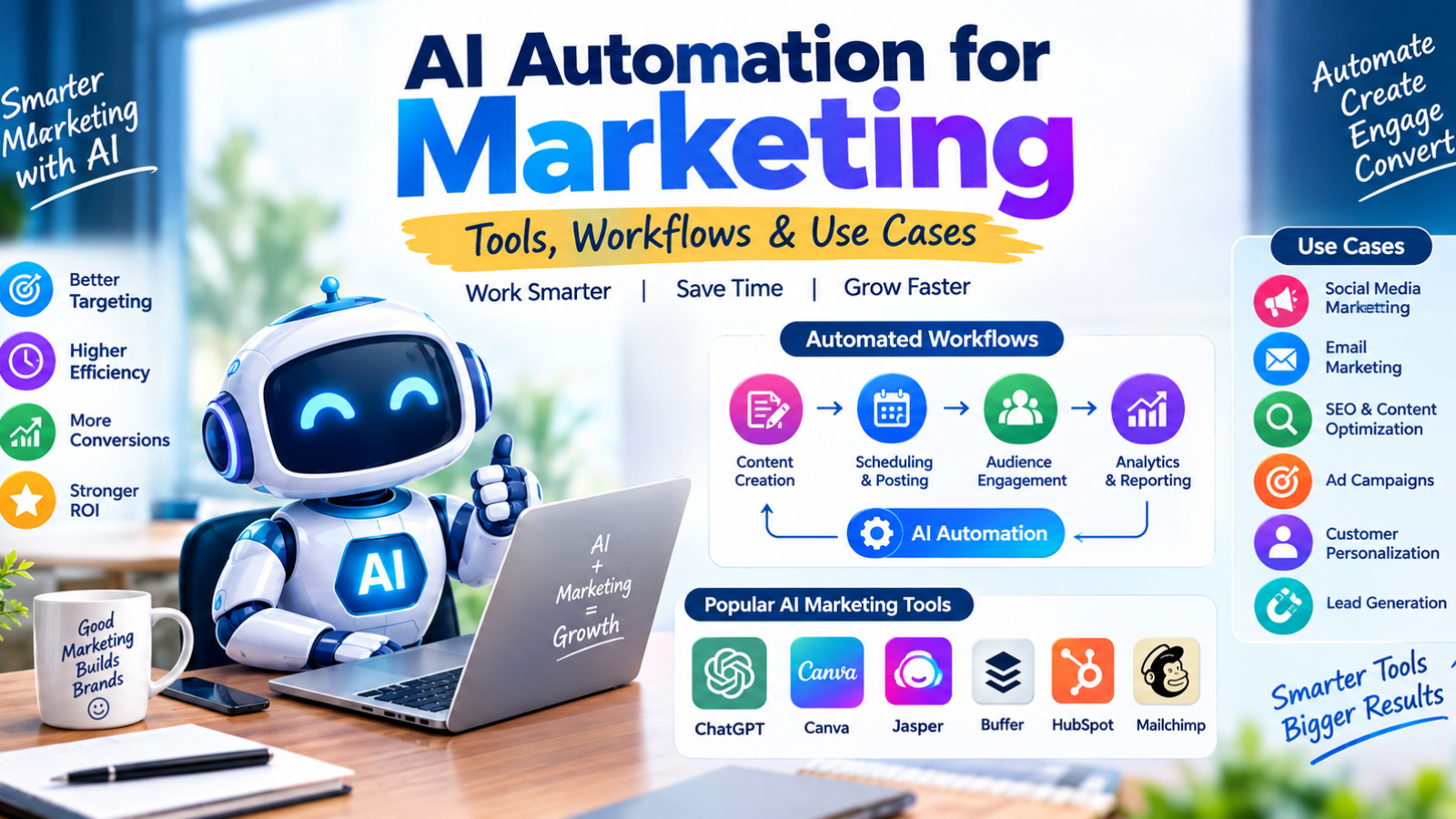
Marketing used to be about fixed sequences: If a user opens Email A, send Email B after three days. If they didn’t, drop them into a generic re-engagement sequence.
AI Automation for Marketing combines predictive analytics, natural language processing, and machine learning algorithms with standard execution channels. Instead of executing rigid rules, AI analyzes real-time user intent, optimizes campaign parameters on the fly, and personalizes individual customer journeys at scale.
Modern marketing automation has evolved. Static decision trees are giving way to dynamic, intelligent systems capable of learning, adapting, and decision-making in real time.
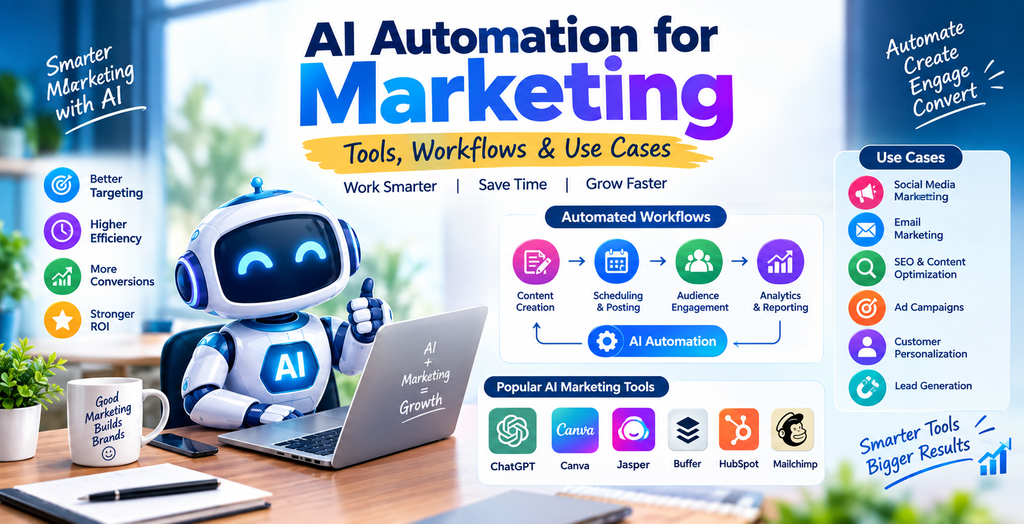
This complete guide to AI Automation for Marketing breaks down the core shift from traditional to AI-driven automation, the top tools powering growth teams today, actionable step-by-step workflows, and high-impact use cases across the funnel.
Traditional vs. AI-Powered Marketing Automation
Understanding the gap between rule-based logic and predictive AI helps teams deploy technology effectively:
| Feature | Traditional Marketing Automation | AI-Powered Marketing Automation |
| Logic Engine | If-This-Then-That (IFTTT) static rules | Machine learning & predictive models |
| Segmentation | Static demographic lists (e.g., job title, region) | Dynamic behavioral clustering (e.g., intent score, churn probability) |
| Personalization | Merge tags (e.g., {{first_name}}) | Adaptive content, individual delivery times, & predictive recommendations |
| Optimization | Manual A/B testing & periodic reviews | Continuous multi-arm bandit testing & real-time bid adjustments |
| Scalability | High operational overhead to maintain complex branch paths | High efficiency; self-refining workflows scale automatically |
AI Automation for Marketing
Building an AI marketing stack doesn’t require replacing your entire infrastructure. It involves augmenting your core foundation with specialized intelligence layers.
       +-------------------------------------------------------+
       |             INTELLIGENCE & COPILOT LAYER              |
       |     (ChatGPT, Claude, Jasper, Midjourney, Writer)     |
       +---------------------------+---------------------------+
                                   |
                                   v
+----------------------------------+----------------------------------+
|                   EXECUTION & WORKFLOW ENGINES                     |
|           (HubSpot AI, Salesforce Einstein, Make, Zapier)          |
+----------------------------------+----------------------------------+
                                   |
          +------------------------+------------------------+
          |                                                 |
          v                                                 v
+-------------------+                             +-------------------+
|  PERFORMANCE ADS  |                             | CONVERSATIONAL AI |
| (Meta Advantage+, |                             | (ManyChat, Drift, |
|   Google PMax)    |                             |   Intercom Fin)   |
+-------------------+                             +-------------------+
1. Data & Workflow Automation
AI Automation for Marketing starts with reliable data and efficient workflows. Modern marketing teams can use AI-powered systems to collect, organize, analyze, and route customer information automatically.
- HubSpot AI & Salesforce Einstein: Embedded AI features across CRM systems that handle predictive lead scoring, opportunity insights, and deal health tracking.
- Make.com & Zapier AI: Modern integration platforms that allow teams to inject LLM prompts directly between webhooks and databases to clean, route, and enrich prospect data automatically.
2. Content Generation & Personalization
One of the most practical applications of AI Automation for Marketing is automated content creation and personalization. AI tools can help marketers produce relevant content while maintaining consistency across multiple channels.
- Jasper & Copy.ai: Enterprise writing platforms designed to generate content across channels while maintaining strict brand voice parameters.
- Persado & Phrasee: AI engines dedicated to optimizing brand messaging, push notifications, and email subject lines for emotional resonance and performance.
- Dynamic Yield / Optimizely: Experience platforms that alter landing page visuals, copy, and CTAs in real time based on referral source and site browsing behavior.
3. Paid Acquisition & Channel Optimization
AI Automation for Marketing can also support paid advertising by using automated testing, audience analysis, creative optimization, and budget allocation.
- Google Performance Max (PMax) & Meta Advantage+: Self-optimizing ad engines that continuously shift media spend, test ad formats, and match creatives to high-converting user segments.
- Albert.ai: Autonomous paid media management tool that analyzes consumer data to execute, test, and optimize cross-channel ad campaigns.
4. Actionable AI Marketing Workflows
Integrating AI Automation for Marketing into day-to-day operations works best when designed as clear, measurable, step-by-step systems.
Workflow 1: Dynamic Multi-Channel Lead Nurturing
Rather than dropping every web lead into the same email drip, AI Automation for Marketing can adapt messaging to individual intent signals.
[ Form Submission / Site Visit ]
               │
               ▼
[ AI Lead Scoring & Intent Analysis ]
               │
       ┌───────┴───────┐
       ▼               ▼
[ High Intent ]  [ Low Intent ]
       │               │
       │               ▼
       │     [ Dynamic Email Nurture ]
       │     (Custom send times & tailored copy)
       ▼
[ Slack/CRM Alert + Auto-Book Link ]- Trigger: A prospect fills out a demo form or spends significant time on pricing pages.
- AI Analysis: An API call passes user activity data, including pages visited, referral path, and company size, to an LLM or predictive scoring engine.
- Execution:
- High Intent (>80 score): The AI drafts a powerful & helpful personalized outreach email referencing the use case, alerts the assigned AE in Slack, and generates a personalized booking link.
- Medium/Low Intent (<80 score): The lead enters a dynamic email nurture track where send times and content topics adjust automatically based on individual engagement patterns.
This type of AI Automation for Marketing can reduce repetitive lead-management tasks while allowing marketing and sales teams to focus on qualified opportunities.
Workflow 2: Automated Content Repurposing Engine
AI Automation for Marketing can help scale content reach without requiring marketers to manually transform every long-form asset into multiple formats.
- Trigger: A new podcast episode, webinar recording, or long-form blog post is published.
- AI Ingestion: Whisper transcribes the media, or an LLM reads the raw text script.
- Multi-Format Processing: A structured prompt template breaks down the core insights to produce:
- 1 LinkedIn narrative post highlighting key takeaways.
- 3 Twitter/X threads targeting specific pain points.
- 1 email newsletter summary with a hook.
- Short-form video scripts complete with timestamps and visual notes.
- Human Review & Dispatch: Drafts populate directly into your social scheduling queue, such as Buffer or Hootsuite, for a quick human check before going live.
This workflow demonstrates how AI Automation for Marketing can connect content production, repurposing, review, and distribution into one streamlined process.
Workflow 3: Predictive Churn Prevention
Another important AI Automation for Marketing use case is customer retention. AI can help identify behavioral changes that may indicate declining engagement.
- Trigger: A customer’s product usage metrics, such as logins and feature activity, dip below a set baseline over a 14-day window.
- Predictive Check: An AI churn model evaluates account health history, support ticket sentiment, and billing status.
- Automated Interventions:
- At-Risk Account: Automatically triggers a targeted in-app message offering a tutorial or relevant case study.
- High-Value At-Risk Account: Notifies the Account Manager in CRM with a generated summary of recent friction points and suggested win-back actions.
Workflow 4: Ad Creative Iteration Loop
With AI Automation for Marketing, teams can continuously create and test advertising variations to respond to changing audience behavior.
- Trigger: A high-performing ad unit experiences a drop in Click-Through Rate (CTR) over 7 days.
- AI Variant Generation: An AI text model generates five headline and angle variations based on the original hook, while an image generator produces complementary visual assets.
- Deployment: The asset combinations are added to Meta Advantage+ or Google PMax ad sets as secondary variants.
- Optimization: The ad platform tests variants in controlled budget pools and adjusts spend based on performance.
Core Use Cases Across the Marketing Funnel
AI Automation for Marketing can be applied across multiple stages of the customer journey, from initial attraction to customer retention.
        FUNNEL STAGE                       AI AUTOMATION USE CASE
     ┌──────────────────────┐        ┌────────────────────────────────────┐
     │ Top of Funnel        │ ────>  │ Programmatic SEO & Ad Creative     │
     │ (Attraction)         │        │ Variant Generation                 │
     └──────────────────────┘        └────────────────────────────────────┘
                 │
                 ▼
     ┌──────────────────────┐        ┌────────────────────────────────────┐
     │ Middle of Funnel     │ ────>  │ Predictive Lead Scoring &          │
     │ (Consideration)      │        │ Conversational AI Bots             │
     └──────────────────────┘        └────────────────────────────────────┘
                 │
                 ▼
     ┌──────────────────────┐        ┌────────────────────────────────────┐
     │ Bottom of Funnel     │ ────>  │ Hyper-Personalized Messaging &     │
     │ (Conversion)         │        │ Dynamic Pricing / Incentives       │
     └──────────────────────┘        └────────────────────────────────────┘
                 │
                 ▼
     ┌──────────────────────┐        ┌────────────────────────────────────┐
     │ Retention            │ ────>  │ Automated Win-back Workflows &     │
     │ (Loyalty)            │        │ Predictive Churn Analytics         │
     └──────────────────────┘        └────────────────────────────────────┘
1. Predictive Lead Scoring & Qualification
Traditional lead scoring relies on arbitrary points, such as +5 for opening an email or +10 for downloading a PDF. AI Automation for Marketing uses AI lead scoring to analyze historical and behavioral data, including company information, technology usage, and website activity, to identify patterns associated with conversions.
2. Hyper-Personalization at Scale
Modern personalization extends well beyond basic field tags. AI Automation for Marketing systems can analyze past purchase history, category preferences, and content consumption to assemble dynamic emails in real time. Individual recipients can receive different product modules, imagery, and send times based on their engagement behavior.
3. Conversational AI & Lead Capture
Static web forms can create friction during the customer journey. AI Automation for Marketing can use conversational AI to qualify visitors through natural dialogue. These systems can answer product questions using an approved knowledge base, identify buyer intent, and support sales scheduling.
4. Smart Send-Time Optimization
Instead of sending an entire list an email at the same time, AI Automation for Marketing can analyze individual engagement patterns. Automated systems can distribute messages according to historical activity and engagement signals.
Best Practices and Strategic Guardrails
Clean Your Data First: Successful AI Automation for Marketing depends heavily on the quality of the underlying data. Inaccurate CRM records, missing tags, and duplicate entries can lead to poor targeting and ineffective personalization.
Keep Humans in the Loop: Always maintain human oversight for content approvals, high-value outreach, and brand-level strategies. Let AI handle data processing, execution, and initial draft work while humans manage quality control, strategic alignment, and brand tone.
Prioritize Transparency and Privacy: Responsible AI Automation for Marketing requires clear data practices. Build automated opt-out workflows, respect applicable privacy frameworks such as GDPR and CCPA, and avoid sending sensitive customer information to public AI systems without appropriate authorization.
Start Small and Scale: Avoid attempting to automate the entire marketing funnel overnight. Select one bottleneck, such as lead-routing speed or ad creative refreshes, build an automated workflow, measure performance against a baseline, and expand iteratively.
Measure Performance: The effectiveness of AI Automation for Marketing should be evaluated using relevant metrics such as conversion rate, engagement, customer acquisition cost, lead response time, retention, and return on advertising spend.
Maintain Quality: Automation should improve marketing operations without sacrificing accuracy or customer experience. Regularly review AI-generated content, workflows, targeting rules, and campaign results to ensure they continue to meet business objectives.
Final Takeaway: AI Automation for Marketing is transforming how businesses manage data, content, lead generation, advertising, personalization, and customer retention. By combining AI capabilities with structured workflows and human oversight, marketing teams can automate repetitive processes while creating more responsive and personalized customer experiences.
Add a Comment